Spolupráce: Projektový atelier DAVID, s.r.o., Pavlína Müllerová, Mjölking s.r.o.
Lokace: Jablonec nad Nisou, ČR
Investor: Statutární město Jablonec nad Nisou
Dodavatel stavby: Termill s.r.o.
Dodavatel interiéru: CNC studio s.r.o.
Fotografie: BoysPlayNice
[:en]
Cooperation: Projektový atelier DAVID, s.r.o., Pavlína Müllerová, Mjölking s.r.o.
Location: Jablonec nad Nisou, ČR
Investor: Statutární město Jablonec nad Nisou
Construction contractor: Termill s.r.o.
Interior contractor: CNC studio s.r.o.
Fotografie: BoysPlayNice
[:]
Školka, do které jsem chodil jako dítě, byla původně farou v centru města. Za komunismu ji přestavěli, aby sloužila novému účelu. Vlastně tam bylo všechno špatně, přesto mám k oné stavbě a její zahradě celý život výjimečný vztah. Snažím-li se rozpomenout, co si pamatuji z let, kdy jsem do školky chodil, není toho moc. Jsou to útržky paměti, neskládají se v celistvé prostředí, zato jsou překvapivě přesné v detailech.
[:en]The kindergarten I attended as a child was originally a rectory in the downtown area. During the communist era it was converted to serve the new purpose. Everything was in fact done wrong there, yet I have maintained a special connection to that building and its grounds throughout my life. If I try to recall what I remember of my years at the kindergarten, there is only so much. Fragments of memories, not adding up to a coherent picture, but remarkably accurate in detail.
[:]


Škraloup na kakau v duritce. Světlo, které svítí přes žaluzie do místnosti, kde předstírám spánek, vůně prostěradel na malých postelích. Úzká tmavá chodba vedoucí do zahrady. Jídelní stolky s igelitovými ubrusy se vzorem růžových květů, staré linoleum v jídelně…
[:en]A cacao scrape in a durit glass. The sunlight pouring through the blinds into the room where I pretend to sleep, the smell of the sheets on the tiny beds. The narrow gloomy corridor leading out into the gardens. Tables with plastic tablecloths with a pattern of pink flowers, old linoleum in the dining room...
[:]


Školky jsou stavby, ve kterých si malé dítě formuje úplně základní vztahy se světem. Na rozdíl od domova je to místo, kde je člověk poprvé sám mimo bezpečí tvořené rodinou a kde uzavírá samostatné vztahy se lidmi a prostředím, často poprvé v životě. Myslíme si, že by školky měly být výjimečné stavby, jejichž základní funkcí je dát dětem pocit, že svět je báječné a zábavné místo pro život.
[:en]Kindergartens are buildings where small children develop the most fundamental relationships with the world. Unlike home, it is a place where one is on their own for the first time outside the safety of family and where one makes individual connections with people and the environment, often for the first time in their lives. We believe that kindergartens should be extraordinary buildings whose primary function is to give children a sense that the world is a wonderful and fun place to live in.
[:]

Když začnete stavbu školky jako architekt řešit, zjistíte, že společnost a instituce opletly tyto stavby naprosto neproniknutelnou pavučinou různých nesmyslných norem, zákazu a příkazů. Chcete vytvářet místo s jasným účelem – dělat radost dětem při zkoumání světa a místo toho počítáte složitou matematickou rovnici. Počítáte kubické metry vyměněného vzduchu za určitý čas. Prokazujete, že všude bude stálé normové osvětlení každého čtverečního metru. Stavba nesmí být ze dřeva. Jako proč? A nesmí mít víc než dvě patra. Proč? Nevíme. Děti, na kterých v procesu návrhu záleží nejvíc, jsou z něj zcela vynechány. Přitom víme, že jsou schopny se architektonickými nápady vážně zabývat a soustředěně odpovídat na otázky, co by pro ně bylo nejlepší.
[:en]When one begins to address the design of a kindergarten as an architect, one finds that society and institutions have entangled these buildings in an absolutely impenetrable web of various nonsensical standards, prohibitions and mandates. One wants to create a place with a clear purpose - to make children happy while exploring the world - and instead one ends up calculating a complex mathematical equation. One is to count the cubic meters of air exchanged in a certain amount of time. Next it is required to prove that there will be constant standard lighting everywhere for each square meter. The building cannot be made of wood. I mean, why? And it can have no more than two stories. Why is that? We have no idea. The children who matter most in the design process are completely left out of it. Yet we know that they are capable of engaging seriously with architectural ideas and answering questions about what would be best for themselves.
[:]


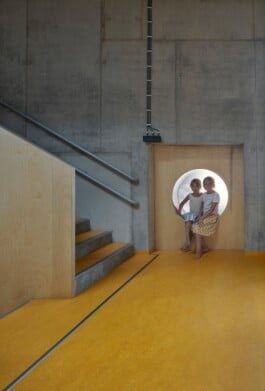
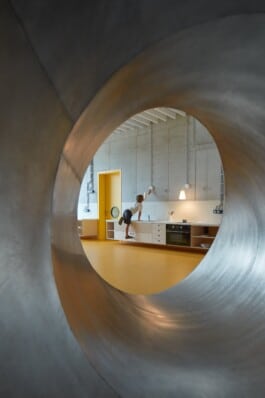
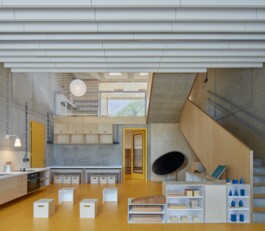
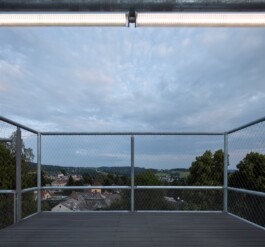
V Jablonci jsme navrhli přístavbu školky odvážně, a tak, abychom mohli vždy hrdě říct, že hlavní kritérium, podle kterého jsme návrh posuzovali, byla zábava pro děti. Představovali jsme si, jaká sranda bude probíhání dokola mezi starou a novou částí školy přes záchody. Chtěli jsme, aby se z přístavby dalo vylézt ven na velkou betonovou terasu, kde jsou děti v bezpečí a zároveň mají co nejvíce svobody. Na střechu jsme umístili další herní terasu, protože je odtud nádherný výhled. Patra uvnitř školky jsme propojili tobogánem, kterým dítě na okamžik bez ptaní budovu opouští a vzápětí se do ní rozesmáté vrací. Vnitřní prostor je vlastně jedna velká místnost rozčleněná vertikálně do čtyř mezipater. Děti tu na sebe vždy mohou vidět, ale také se můžou na mnoha místech zašít, když chtějí soukromí pro svoji neplechu. Věříme, že jsme nezklamali, nepodlehli tlaku nudy a postavili dům, ve kterém budou děti moci svobodně blbnout, jen tak mimochodem se rozvíjet a architektura jim v tom půjde naproti.
[:en]In Jablonec, we designed the kindergarten extension boldly, and in such a manner that we could always take pride in saying that the main criteria by which we judged the design was the fun for the children. We pictured how fun it would be to run around between the old and the new part of the building through the bathrooms. We wanted to make it possible to climb out of the extension onto a large concrete terrace, where the children are safe and at the same time have as much freedom as possible. We put another play terrace on the roof because the view from the roof is beautiful. We connected the floors inside the kindergarten with a slide, which the children use to leave the building for a moment without asking and then return to it giggling. The interior space is in fact one large room split vertically into four levels. The children can always see each other, but they can also hide in a number of places if they want privacy for their mischief. We believe that we have not failed, we have not succumbed to the pressure of boredom and we have created a building in which children will be free to goof around, to develop casually, and the architecture will meet their needs.
[:]


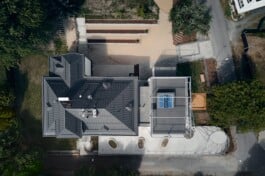
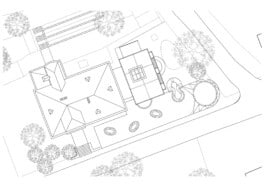
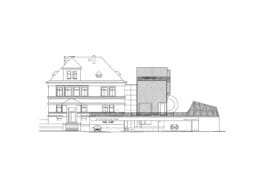
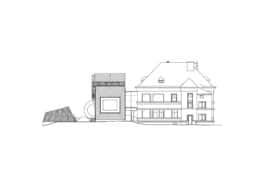
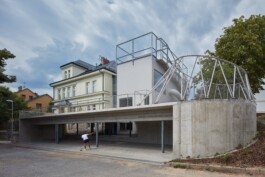
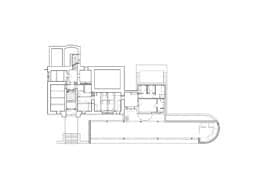
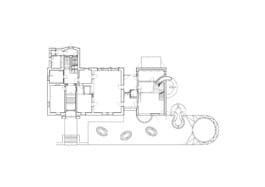
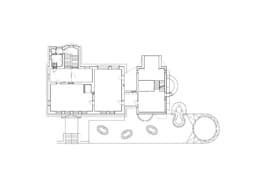
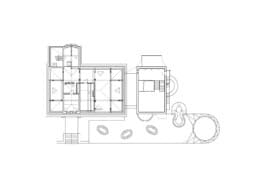
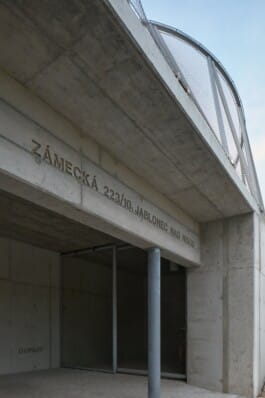
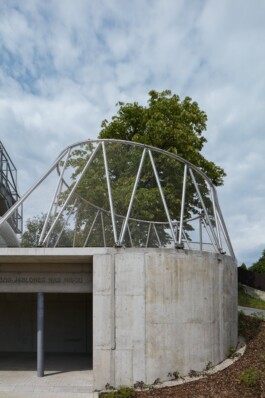
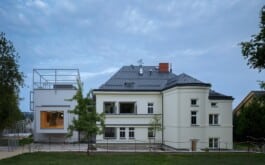
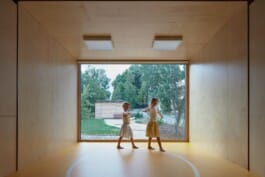
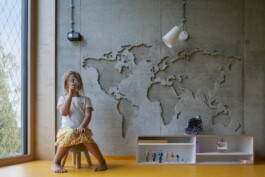
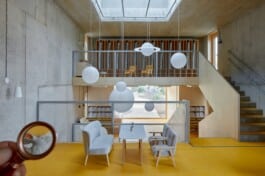
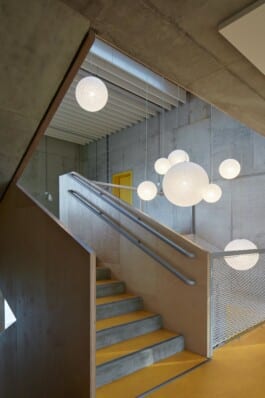
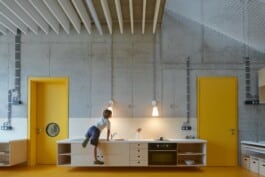
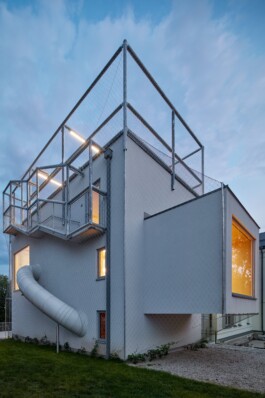
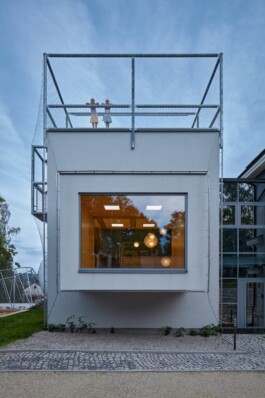
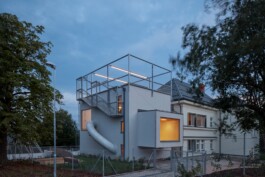
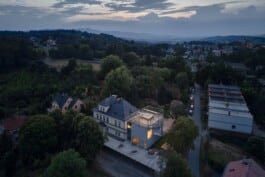
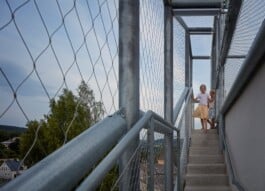
Přístavba Mateřské školy Montessori v Jablonci nad Nisou je dvoupodlažní železobetonová stavba. Stojí vedle historické stavby školky a svou formou a materiálem s touto větší stavbou kontrastuje. Je to jednoduchý hranol s několika výstupky, který je celý obalen do nerezové sítě. Uvnitř je stavba vertikálně rozčleněna na přízemí a tři mezipatra uspořádaná okolo schodiště a zrcadla, nad kterým je ve střeše velký světlík. Na mezipatrech jsou prostory pro pobyt dětí, každé mezipatro má jinou atmosféru a tvar, aby bylo pro děti jiným způsobem podnětné. Přístavba je v přízemí a druhém mezipatře napojena krčkem na historickou budovu školky. Z přízemí je přímý výstup na betonovou chráněnou hrací terasu nad parkovištěm aut. Z druhého mezipatra vede venkovní tobogán zpět do přízemi, kterým si děti mohou urychlit cestu dolů. Z třetího mezipatra je výstup dveřmi na fasádu, kde jsou venkovní schody vedoucí na střešní terasu. Ta je opatřena bezpečnostní sítí a muže se stát velkou letní hernou pro děti. Přístavba navyšuje kapacitu školky o jednu třídu.
[:en]The extension of the Montessori Kindergarten in Jablonec nad Nisou is a two-story building made of reinforced concrete. It stands next to a historic kindergarten building and its form and material contrasts with this larger building. It is a simple prism with a few protrusions, which is wrapped entirely in stainless steel mesh. Inside, the building is vertically divided into a ground floor and three intermediary floors arranged around a staircase and a void, above which is a large skylight in the roof. On the intermediate floors there are spaces for children to spend time, each intermediate floor has a different atmosphere and form to stimulate the children's minds in a different way. The extension is connected to the historic kindergarten building on the ground and second floor. From the ground floor there is direct access to the concrete sheltered play terrace above the car park. From the second floor, an outdoor slide leads back to the ground floor, which children can use to speed up their way down. From the third intermediate level there is a doorway with outdoor staircase leading to the roof terrace. This is fitted with a safety net and can become a large summer playground for children. The extension increases the capacity of the kindergarten by one class.
[:]

Zpět nahoru
[:en]Back to top
[:]
Spolupráce: Projektový atelier DAVID, s.r.o., Pavlína Müllerová, Mjölking s.r.o.
Lokace: Jablonec nad Nisou, ČR
Investor: Statutární město Jablonec nad Nisou
Dodavatel stavby: Termill s.r.o.
Dodavatel interiéru: CNC studio s.r.o.
Fotografie: BoysPlayNice
[:en]
Cooperation: Projektový atelier DAVID, s.r.o., Pavlína Müllerová, Mjölking s.r.o.
Location: Jablonec nad Nisou, ČR
Investor: Statutární město Jablonec nad Nisou
Construction contractor: Termill s.r.o.
Interior contractor: CNC studio s.r.o.
Fotografie: BoysPlayNice
[:]
Školka, do které jsem chodil jako dítě, byla původně farou v centru města. Za komunismu ji přestavěli, aby sloužila novému účelu. Vlastně tam bylo všechno špatně, přesto mám k oné stavbě a její zahradě celý život výjimečný vztah. Snažím-li se rozpomenout, co si pamatuji z let, kdy jsem do školky chodil, není toho moc. Jsou to útržky paměti, neskládají se v celistvé prostředí, zato jsou překvapivě přesné v detailech.
[:en]The kindergarten I attended as a child was originally a rectory in the downtown area. During the communist era it was converted to serve the new purpose. Everything was in fact done wrong there, yet I have maintained a special connection to that building and its grounds throughout my life. If I try to recall what I remember of my years at the kindergarten, there is only so much. Fragments of memories, not adding up to a coherent picture, but remarkably accurate in detail.
[:]


Škraloup na kakau v duritce. Světlo, které svítí přes žaluzie do místnosti, kde předstírám spánek, vůně prostěradel na malých postelích. Úzká tmavá chodba vedoucí do zahrady. Jídelní stolky s igelitovými ubrusy se vzorem růžových květů, staré linoleum v jídelně…
[:en]A cacao scrape in a durit glass. The sunlight pouring through the blinds into the room where I pretend to sleep, the smell of the sheets on the tiny beds. The narrow gloomy corridor leading out into the gardens. Tables with plastic tablecloths with a pattern of pink flowers, old linoleum in the dining room...
[:]


Školky jsou stavby, ve kterých si malé dítě formuje úplně základní vztahy se světem. Na rozdíl od domova je to místo, kde je člověk poprvé sám mimo bezpečí tvořené rodinou a kde uzavírá samostatné vztahy se lidmi a prostředím, často poprvé v životě. Myslíme si, že by školky měly být výjimečné stavby, jejichž základní funkcí je dát dětem pocit, že svět je báječné a zábavné místo pro život.
[:en]Kindergartens are buildings where small children develop the most fundamental relationships with the world. Unlike home, it is a place where one is on their own for the first time outside the safety of family and where one makes individual connections with people and the environment, often for the first time in their lives. We believe that kindergartens should be extraordinary buildings whose primary function is to give children a sense that the world is a wonderful and fun place to live in.
[:]

Když začnete stavbu školky jako architekt řešit, zjistíte, že společnost a instituce opletly tyto stavby naprosto neproniknutelnou pavučinou různých nesmyslných norem, zákazu a příkazů. Chcete vytvářet místo s jasným účelem – dělat radost dětem při zkoumání světa a místo toho počítáte složitou matematickou rovnici. Počítáte kubické metry vyměněného vzduchu za určitý čas. Prokazujete, že všude bude stálé normové osvětlení každého čtverečního metru. Stavba nesmí být ze dřeva. Jako proč? A nesmí mít víc než dvě patra. Proč? Nevíme. Děti, na kterých v procesu návrhu záleží nejvíc, jsou z něj zcela vynechány. Přitom víme, že jsou schopny se architektonickými nápady vážně zabývat a soustředěně odpovídat na otázky, co by pro ně bylo nejlepší.
[:en]When one begins to address the design of a kindergarten as an architect, one finds that society and institutions have entangled these buildings in an absolutely impenetrable web of various nonsensical standards, prohibitions and mandates. One wants to create a place with a clear purpose - to make children happy while exploring the world - and instead one ends up calculating a complex mathematical equation. One is to count the cubic meters of air exchanged in a certain amount of time. Next it is required to prove that there will be constant standard lighting everywhere for each square meter. The building cannot be made of wood. I mean, why? And it can have no more than two stories. Why is that? We have no idea. The children who matter most in the design process are completely left out of it. Yet we know that they are capable of engaging seriously with architectural ideas and answering questions about what would be best for themselves.
[:]


V Jablonci jsme navrhli přístavbu školky odvážně, a tak, abychom mohli vždy hrdě říct, že hlavní kritérium, podle kterého jsme návrh posuzovali, byla zábava pro děti. Představovali jsme si, jaká sranda bude probíhání dokola mezi starou a novou částí školy přes záchody. Chtěli jsme, aby se z přístavby dalo vylézt ven na velkou betonovou terasu, kde jsou děti v bezpečí a zároveň mají co nejvíce svobody. Na střechu jsme umístili další herní terasu, protože je odtud nádherný výhled. Patra uvnitř školky jsme propojili tobogánem, kterým dítě na okamžik bez ptaní budovu opouští a vzápětí se do ní rozesmáté vrací. Vnitřní prostor je vlastně jedna velká místnost rozčleněná vertikálně do čtyř mezipater. Děti tu na sebe vždy mohou vidět, ale také se můžou na mnoha místech zašít, když chtějí soukromí pro svoji neplechu. Věříme, že jsme nezklamali, nepodlehli tlaku nudy a postavili dům, ve kterém budou děti moci svobodně blbnout, jen tak mimochodem se rozvíjet a architektura jim v tom půjde naproti.
[:en]In Jablonec, we designed the kindergarten extension boldly, and in such a manner that we could always take pride in saying that the main criteria by which we judged the design was the fun for the children. We pictured how fun it would be to run around between the old and the new part of the building through the bathrooms. We wanted to make it possible to climb out of the extension onto a large concrete terrace, where the children are safe and at the same time have as much freedom as possible. We put another play terrace on the roof because the view from the roof is beautiful. We connected the floors inside the kindergarten with a slide, which the children use to leave the building for a moment without asking and then return to it giggling. The interior space is in fact one large room split vertically into four levels. The children can always see each other, but they can also hide in a number of places if they want privacy for their mischief. We believe that we have not failed, we have not succumbed to the pressure of boredom and we have created a building in which children will be free to goof around, to develop casually, and the architecture will meet their needs.
[:]


Přístavba Mateřské školy Montessori v Jablonci nad Nisou je dvoupodlažní železobetonová stavba. Stojí vedle historické stavby školky a svou formou a materiálem s touto větší stavbou kontrastuje. Je to jednoduchý hranol s několika výstupky, který je celý obalen do nerezové sítě. Uvnitř je stavba vertikálně rozčleněna na přízemí a tři mezipatra uspořádaná okolo schodiště a zrcadla, nad kterým je ve střeše velký světlík. Na mezipatrech jsou prostory pro pobyt dětí, každé mezipatro má jinou atmosféru a tvar, aby bylo pro děti jiným způsobem podnětné. Přístavba je v přízemí a druhém mezipatře napojena krčkem na historickou budovu školky. Z přízemí je přímý výstup na betonovou chráněnou hrací terasu nad parkovištěm aut. Z druhého mezipatra vede venkovní tobogán zpět do přízemi, kterým si děti mohou urychlit cestu dolů. Z třetího mezipatra je výstup dveřmi na fasádu, kde jsou venkovní schody vedoucí na střešní terasu. Ta je opatřena bezpečnostní sítí a muže se stát velkou letní hernou pro děti. Přístavba navyšuje kapacitu školky o jednu třídu.
[:en]The extension of the Montessori Kindergarten in Jablonec nad Nisou is a two-story building made of reinforced concrete. It stands next to a historic kindergarten building and its form and material contrasts with this larger building. It is a simple prism with a few protrusions, which is wrapped entirely in stainless steel mesh. Inside, the building is vertically divided into a ground floor and three intermediary floors arranged around a staircase and a void, above which is a large skylight in the roof. On the intermediate floors there are spaces for children to spend time, each intermediate floor has a different atmosphere and form to stimulate the children's minds in a different way. The extension is connected to the historic kindergarten building on the ground and second floor. From the ground floor there is direct access to the concrete sheltered play terrace above the car park. From the second floor, an outdoor slide leads back to the ground floor, which children can use to speed up their way down. From the third intermediate level there is a doorway with outdoor staircase leading to the roof terrace. This is fitted with a safety net and can become a large summer playground for children. The extension increases the capacity of the kindergarten by one class.
[:]

Zpět nahoru
[:en]Back to top
[:]